
IV Therapy
IV Hydration and vitamin therapy
-
Why IV Therapy?
Intravenous (IV) therapy involves the administration of fluids and/or micronutrients directly into the vascular system. This route bypasses gastrointestinal absorption and first-pass metabolism, and may be clinically appropriate in circumstances where oral intake is inadequate, poorly tolerated, or where documented deficiency exists.
While intravenous administration can produce measurable increases in circulating nutrient levels, this does not necessarily translate to improved clinical outcomes in otherwise healthy individuals. The current peer-reviewed evidence supporting IV vitamin therapy for general wellness in the absence of diagnosed deficiency remains limited.
Oral nutrition and supplementation are suitable and effective for many individuals. The decision to proceed with IV therapy is made following individual clinical assessment, consideration of medical history, and discussion of risks, benefits, limitations, and alternatives.
IV hydration and vitamin therapy are adjunctive supportive measures only. They do not replace assessment, diagnosis, or treatment by a qualified medical practitioner, and are not a substitute for prescribed medications, mental health care, or management by a GP or specialist. Individuals with acute, chronic, or complex medical conditions should seek appropriate medical advice.
All treatments are provided in accordance with informed consent principles and current regulatory standards.
-
Key Benefits
• IV fluids may assist with rehydration when oral intake has been inadequate or when faster fluid replacement is clinically appropriate.
• IV vitamins may be considered where there is a documented deficiency or where oral supplementation is not suitable.
• Intravenous delivery allows nutrients and fluids to enter the bloodstream directly. This may be relevant in certain clinical situations, following individual assessment.
• Some people describe feeling more energised or mentally clearer after treatment. Current research in otherwise healthy individuals is limited, and responses can vary.
• IV hydration may support fluid and electrolyte balance in people experiencing dehydration.
• Certain vitamins, such as B-group vitamins and vitamin C, play a role in normal immune and nervous system function. IV administration may be considered when clinically indicated.
• In cases of diagnosed deficiencies (for example, vitamin B12), parenteral treatment is an established medical approach.
• IV therapy is not a substitute for a balanced diet, adequate sleep, mental health care, or medical treatment. Suitability is assessed individually.
• All treatments are provided following clinical screening, discussion of risks and benefits, and informed consent.
-
What to Expect
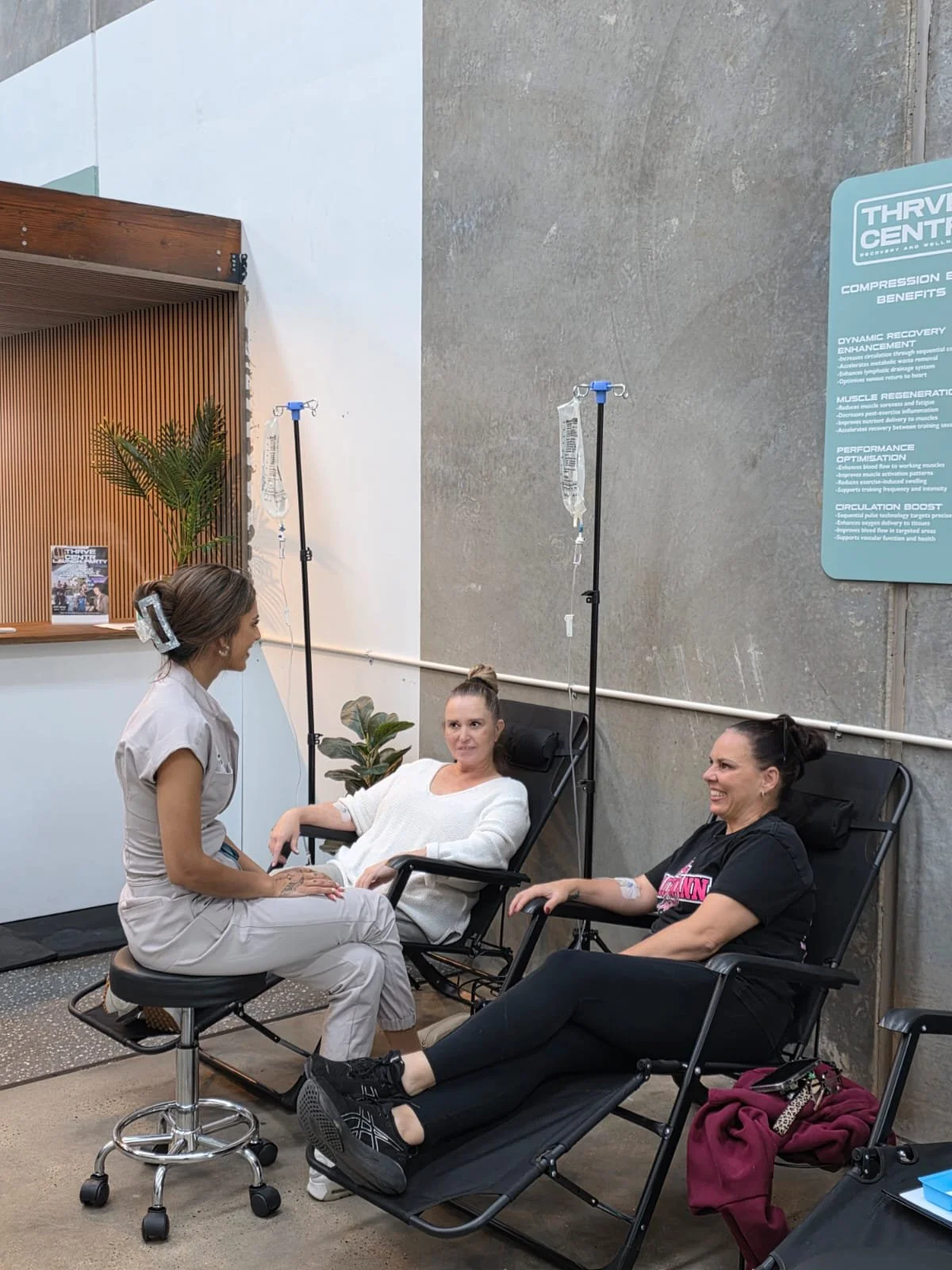
Your appointment begins with a clinical consultation to review your medical history, current medications, and relevant health information. This assessment is used to determine whether IV therapy is appropriate and, if so, which formulation may be suitable based on clinical considerations.
If treatment proceeds, a sterile single-use cannula (a small, flexible tube) is inserted into a peripheral vein in the arm using aseptic technique. The prescribed fluids and/or micronutrients are then administered intravenously under observation.
Infusions typically take approximately 30–60 minutes, depending on the formulation and individual circumstances.
All treatments are provided following informed consent and in accordance with current clinical and regulatory standards. IV therapy is not a substitute for medical diagnosis or treatment by a qualified medical practitioner.
-
Meet Your Registered Nurse
All treatments are administered by Jessica, a Division One Registered Nurse with nearly a decade of clinical experience in medical and surgical nursing, including five years in Emergency Medicine.
Jessica has completed additional training in IV therapy and administers treatments in accordance with current clinical standards and aseptic technique.
Each appointment is conducted under professional supervision, beginning with a consultation to assess suitability, discuss potential risks and benefits, and obtain informed consent.